
Tumor Markers:- Part 3 – Alk. phosphatase, CK, LDH, Acid phosphatase, and PSA
Tumor Markers
- There are various specific tumor markers for various types of malignancies.
- Following is the list of tumor markers.
- Alkaline phosphatase.
- Creatinine Kinase.
- Lactate dehydrogenase.
- Prostatic acid phosphatase.
- Prostatic specific antigen.
- Adrenocorticotropic hormone.
- Calcitonin.
- HCG
- Carcinoembryonic antigen (CEA).
- AFP
- CA 15-3
- CA 19-9
- CA 50
- CA 72-4
- CA 125
- CA 549
Alkaline Phosphatase
What sample is needed for Alkaline phosphatase?
- We need venous blood to prepare the serum.
What are the precautions for Alkaline phosphatase?
- Avoid hemolyzed samples; it will give the wrong results.
- Some drugs increased the value, such as vitamin D, barbiturates, allopurinol, chlorpropamide, colchicine, indomethacin, isoniazid, and methotrexate.
- A fasting sample is needed; a fast of 10 to 12 hours before collection is important.
- If the sample is left at room temperature, it will lead to false and increased results.
What are the indications for Alkaline phosphatase?
- It is advised for bone and liver diseases.
- It is advised in the metastatic bone tumors.
How will you discuss the pathophysiology of Alkaline phosphatase?
- Alkaline phosphatase is present in all the tissue, but the maximum amount is found in the liver, bone, and placenta.
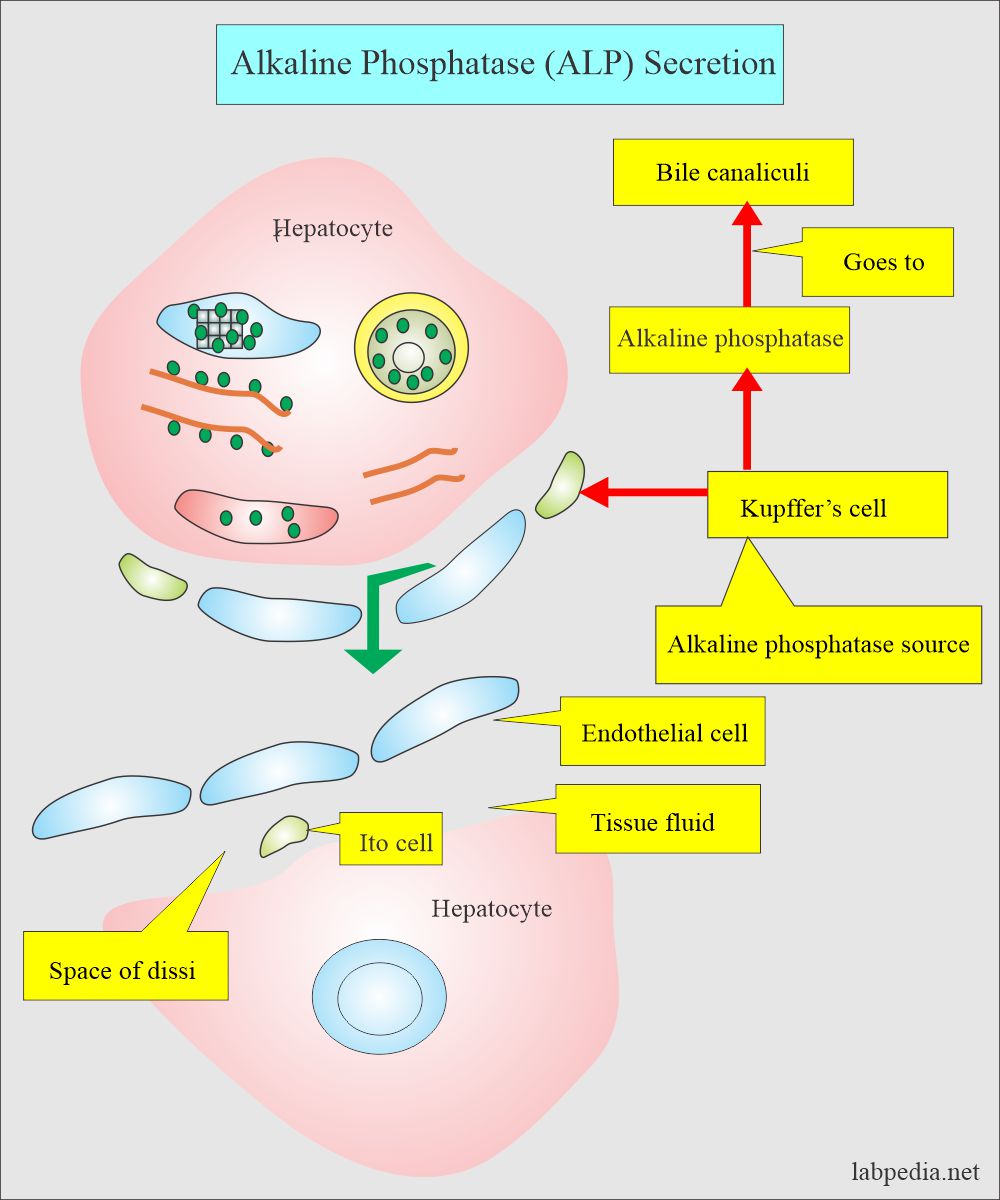
Alkaline phosphatase in liver cell
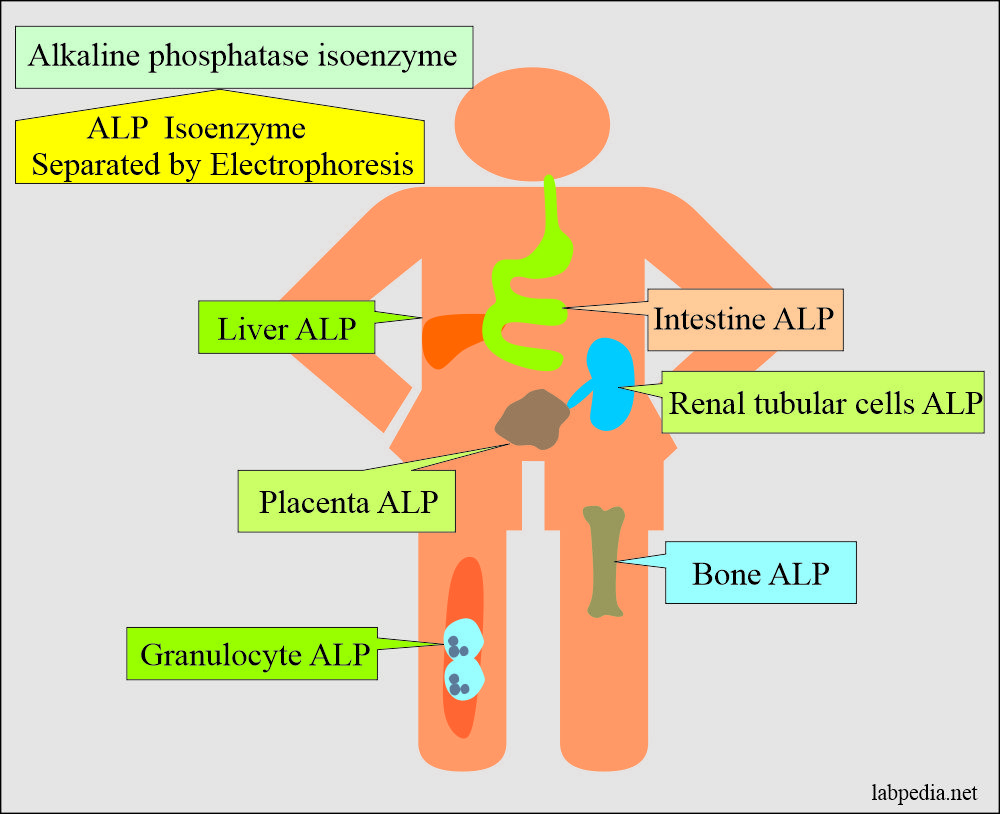
Alkaline phosphatase isoenzyme
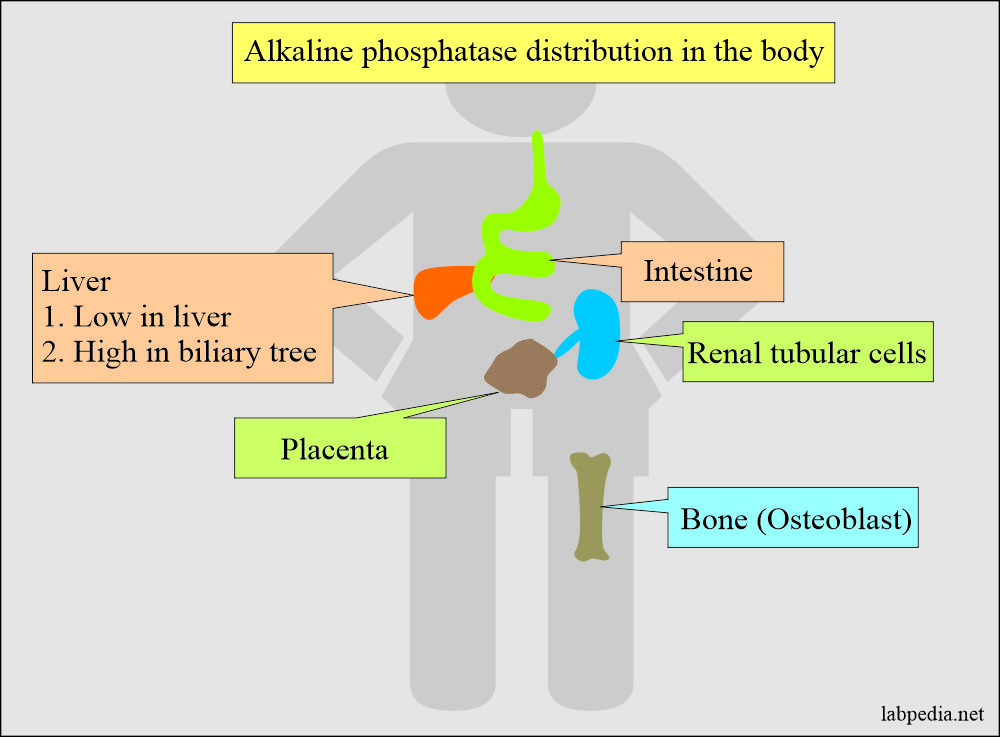
Tumor Markers: Alkaline phosphatase distribution in the body
- Alkaline phosphatase originates in osteoblasts, the lining of the hepatobiliary tree, intestinal tract, and placenta.
- Alkaline phosphatase is used as an index of liver and bone diseases.
What are the isoenzymes of Alkaline phosphatase?
- Liver isoenzyme = 20 to 130 U/L.
- Bone isoenzyme = 20 to 120 U/L.
- Intestinal isoenzyme = 0 to 18 U/L.
- Placental isoenzyme = 50% of the total in the third trimester.
- The liver isoenzyme is more stable than the bone isoenzyme.
- Placental isoenzyme is produced by the trophoblastic cells.
- Placental isoenzyme is also raised in pregnant women.
- This was discovered by Fishman in 1968.
- This was the first tumor marker, along with AFP and CEA.
- The alkaline phosphatase marker is raised in the following ways:
- Metastatic tumors of bone or liver.
- Prostatic cancer with bone metastasis. There is osteoblastic activity and a markedly raised level.
- Breast cancer metastasis to the bone with osteolytic activity and mildly raised level.
- Leukemia, Lymphoma, and sarcoma with metastases to the liver.
- This may be raised in other malignancies like ovarian, lung, trophoblastic, gestation tumors, seminoma, Hodgkin’s lymphoma, and GIT tumors.
What is the normal Alkaline phosphatase?
Source 2
- Adult = 30 to 120 units/L
- Old people = Higher than the adult’s value.
- Children/adolescents:
- <2 years = 85 to 235 units/L.
- 2 to 8 years = 65 to 210 units/L.
- 9 to 15 years = 60 to 300 units/L.
- 16 to 21 years = 30 to 300 units/L.
What are the causes of increased Alkaline phosphatase?
- Osteosarcoma.
- Liver cell carcinoma.
- Metastasis to the liver.
- Primary or secondary bone tumors.
- Liver and bone lymphoma and leukemia.
Creatine Kinase (CK)
What sample is needed for Creatine kinase (CK)?
- We need venous blood to prepare the serum.
What are the indications for Creatine kinase?
- It is advised for the diagnosis of Myocardial infarction.
- It is advised in the metastatic bone tumors.
How will you discuss the pathophysiology of Creatine Kinase?
- Creatine kinase is also called creatine phosphokinase (CPK), and CK isoenzymes.
- Creatine kinase is the enzyme that activates creatine in the muscles by transferring a high-energy phosphate group in the reaction. This reaction is reversible.
- Creatine + ATP ↔ Creatine phosphate + ADP
- CK is high concentrations in the heart, skeletal muscles, and brain.
- Creatine kinase is a dimer consisting of two subunits (polypeptide chains):
- CK – M
- CK – B
- There are three isoenzymes:
- CK-1 (BB). is present in the brain, prostate, GIT, bladder, lungs, uterus, and placenta.
- CK-2 (MB) is present in high concentrations in the cardiac muscles.
- CK-3 (MM) is present in the cardiac and skeletal muscles.
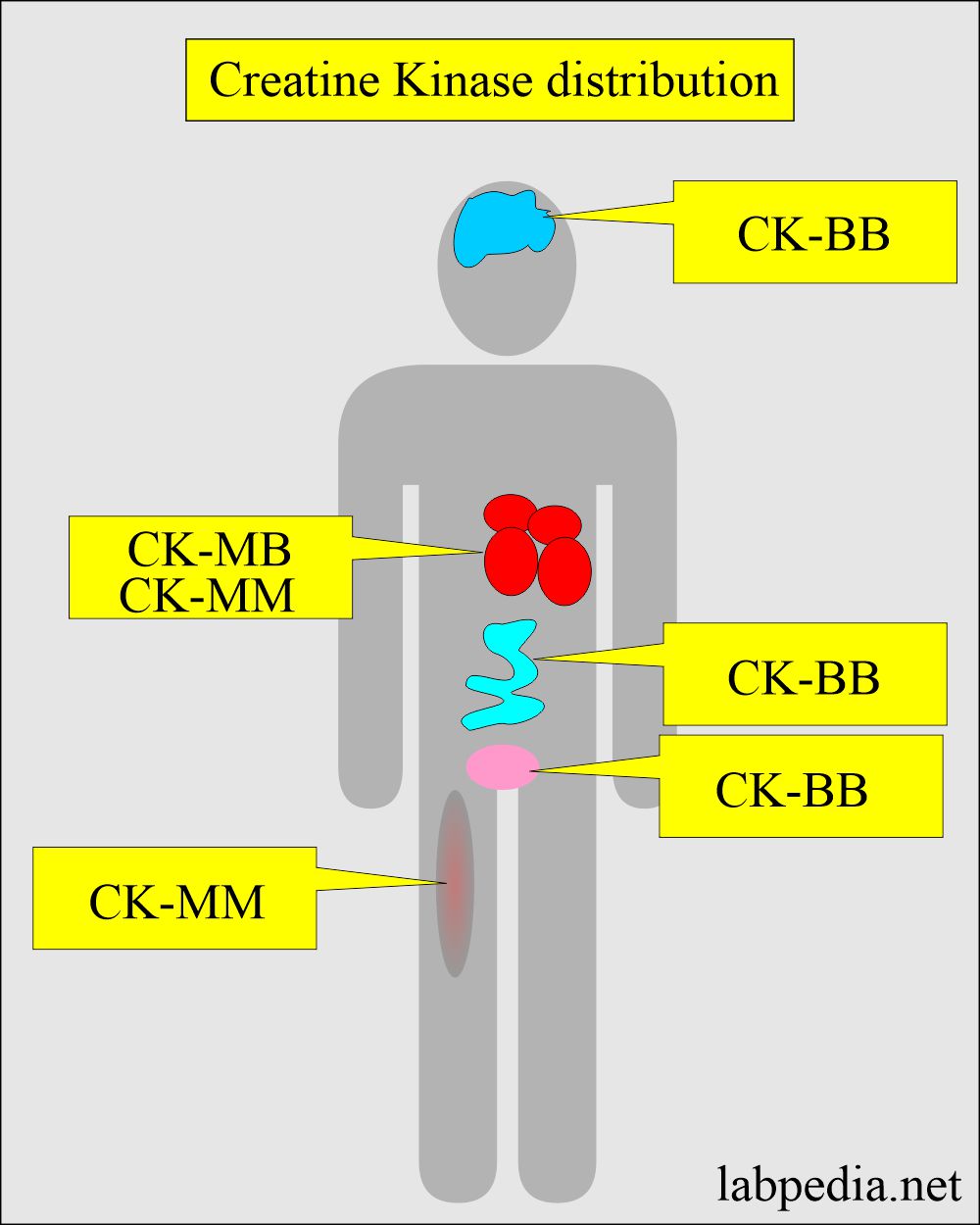
Creatine kinase isoenzyme
What are the causes of raised Creatine Kinase in malignancies?
- This is raised in:
- Prostatic cancer.
- Small cell carcinoma of the lung.
- Maybe elevated in breast, ovary, stomach, and colon cancers.
What is the normal value of total CPK (Source 2):
- Adult/elderly
- Male = 55 to 170 units/L
- Female = 30 to 135 units/L
- Values are higher after the exercise.
- Newborn = 68 to 580 units/L
Lactate Dehydrogenase (LDH)
What sample is needed for Lactate dehydrogenase?
- Venous blood is taken to prepare the serum.
What are the indications for lactate dehydrogenase?
- It is advised to see cell necrosis in conditions like acute myocardial infarction, cerebrovascular accident, and hemolytic anemia.
- It is advised for liver diseases, renal infarction, pancreatitis, muscular dystrophy, and acute pulmonary infarction.
- It is advised in cancers.
What is the normal LDH level?
Source 2
- Adult/elderly = 100 to 190 units/L at 37 °C.
How will you discuss the pathophysiology of lactate dehydrogenase (LDH)?
- This is an enzyme in the glycolytic pathway’s action, and it is released when cell membrane damage occurs.
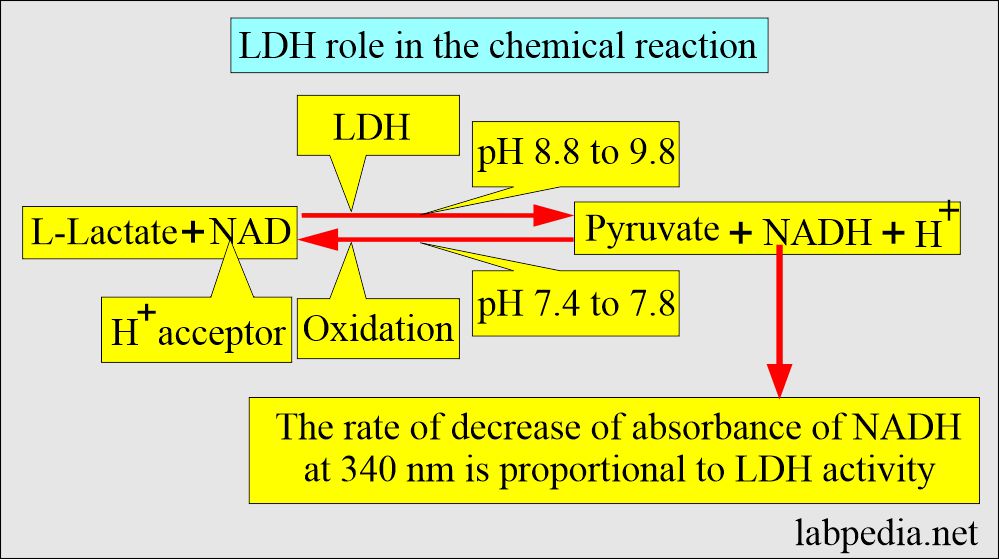
Lactate dehydrogenase (LDH) enzyme role in a chemical reaction
- LDH is found in the cells of Herat, RBCs, kidneys, liver, brain, lungs, and skeletal muscles.
- When there is an injury to cells then, LDH enters the blood.
- This is not a good indicator of cell injury because of its presence in most of the tissue.
- Its level correlates with the tumor mass and gives a prognostic indicator of the progress of the disease.
LDH isoenzymes are:
| LDH isoenzyme | Tumor Markers: | Organ |
|
|
|
|
|
|
|
|
|
|
|
|
|
|
It is present in:
|
- Isoenzyme LD-5 is associated with liver metastasis.
- LDH is a nonspecific tumor marker and is raised in:
- Liver cell carcinoma.
- Lymphomas.
- Acute leukemias.
- Germ cell testicular tumors.
- Breast cancer.
- Colon cancer.
- Stomach cancer.
- Lung cancer.
- An elevated level of LDH in the urine indicates neoplasm or injury to the urogenital system.
- LD-5 positive in the spinal fluid indicates metastasis to the central nervous system.
Neuron-specific Enolase (NSE)
What are the Indications for Neuron-specific enolase (NSE)?
- It monitors treatment and predicts relapse in small-cell lung cancer.
How will you discuss the pathophysiology of NSE?
- Neuron-specific enolase (NSE) is the isoenzyme in the glycolytic pathway identified by the immunoassay and found mostly in neuron and neuroendocrine cells.
- This is a glycolytic pathway.
What is the normal value of Neuron-speicfic Enolase (NSE)?
- NSE = < 12.5 µg/mL.
What are the causes of increased NSE?
- It is raised in neuroendocrine tumors:
- Small cell carcinoma of the lung.
- It is found in 68% of limited diseases.
- 87% is found in the extensive disease.
- What is the purpose of Neuron-specific enolase (NSE)?
- It monitors the following tumors:
- Neuroblastoma.
- Pheochromocytoma.
- Carcinoid.
- Medullary carcinoma of the thyroid.
- Melanoma.
- Pancreatic endocrine tumors.
Prostatic acid phosphatase
What sample is needed for Prostatic acid phosphatase?
- Venous blood is needed to prepare the serum.
What are the indications for Prostatic acid phosphatase?
- It is advised to diagnose prostatic cancer.
- It is also advised to see the response to the treatment and monitor the cancer.
- Advised in case of metastasis of the prostatic cancer.
What are the precautions for prostatic acid phosphatase?
- Avoid rectal examination or prostatic massage before testing the blood sample at least 2 days before this test.
- Avoid urinary catheterization or instrumentation before taking a blood sample.
How will you discuss the pathophysiology of the prostatic acid phosphatase?
- Acid phosphatase is found in many tissues, including the liver, blood vessels, red blood cells, platelets, and bone marrow.
- The maximum concentration is found in the prostate gland.
- The estimation of acid phosphatase is advised for:
- The diagnosis of prostatic carcinoma.
- Staging of the prostatic carcinoma.
- To monitor the efficacy of the treatment of prostatic carcinoma.
- The level is raised when the prostatic carcinoma has metastasized beyond the capsules to the other parts of the body, especially to the bone.
- After complete curative surgery for prostatic cancer, the acid phosphatase decreases to normal in several days.
- When the patient is treated with estrogen therapy, it returns to normal in several weeks.
- Prostatic acid phosphatase (PAP) is a better indicator and most clinically significant.
- PAP is more accurate than total acid phosphatase.
- This is produced primarily by the prostate and raised in:
- Prostatic cancer.
- Osteogenic sarcoma.
- Multiple myelomas.
- Metastasis to the bone.
Prostatic specific antigen (PSA)
- PSA is a glycoprotein normally found in the cytoplasm of the prostatic epithelial cells.
- This antigen is detected in all males, but its level is markedly increased in prostatic carcinoma.
- Its level is related to the size of the tumor.
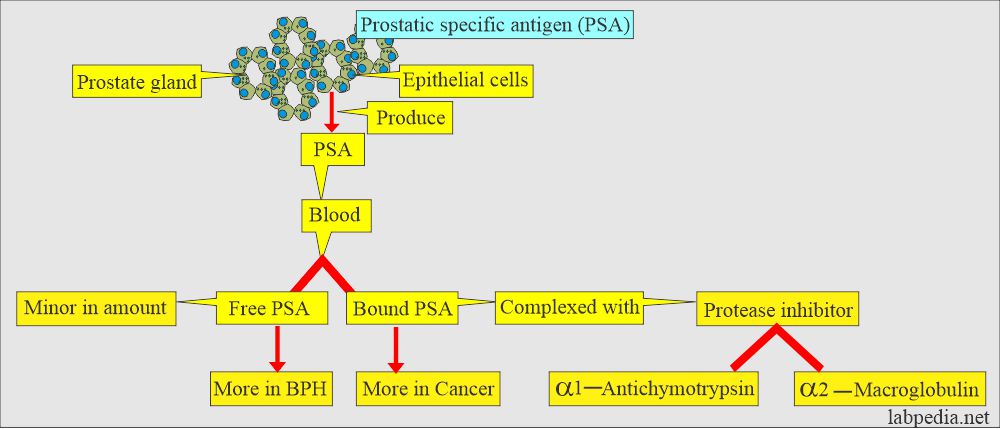
Prostatic specific antigen (PSA) mode of action
What is the use of PSA?
- This is specific for the diagnosis of prostatic cancer.
- It is used to detect, stage, and monitor the treatment of prostatic carcinoma.
- Its use is more specific for monitoring the treatment.
- The sensitivity of PSA is 70% at the cut-off value of 4.0 µg/L.
- Specificity is more than 90% if the cut-off value is raised to 8 µg/L.
- The level of PSA correlates with the stage of the disease.
When should PSA be measured for the follow-up of prostatic carcinoma?
- Every 3 months after the surgery during the first year.
- After 4 months in the second year.
- After 6 months every year.
Questions and answers:
Question 1: How to treat prostatic carcinoma with follow-up by PSA?
PSA should be done every 3 months after the surgery during the first year.
Question 2: What is the role of Neuron-specific enolase?
It is advised to diagnose various tumors like neuroblastoma, carcinoid, etc.
Excellent bookmarks.
Thanks.
My son had cancer (Burkitts Lymphoma) when he was ten. He is now 31. His lab work showed that his Alkaline phosphatase is low (44-121. Should he be concern or do further testing?
Please see this link:
https://labpedia.net/alkaline-phosphatase-alp/
This link will help you to treat low alkaline phosphatase.