
Lipoprotein:- part 4 – Chylomicron
Chylomicron
What sample is needed for Chylomicron?
- The best sample is serum after 10 to 12 hours of fasting.
- Plasma can also be used.
- The preservative sample is stable for one week at 4 °C.
How will you define chylomicron?
- A chylomicron is a particulate form of lipoprotein responsible for transporting exogenous cholesterol and triglycerides from the small intestine to adipose tissue after a meal.
- A chylomicron is a spherical particle with a core of triglycerides surrounded by a monolayer of phospholipids, cholesterol, and lipoprotein.
- Apolipoprotein (apo) B-48 is important for the formation of chylomicrons.
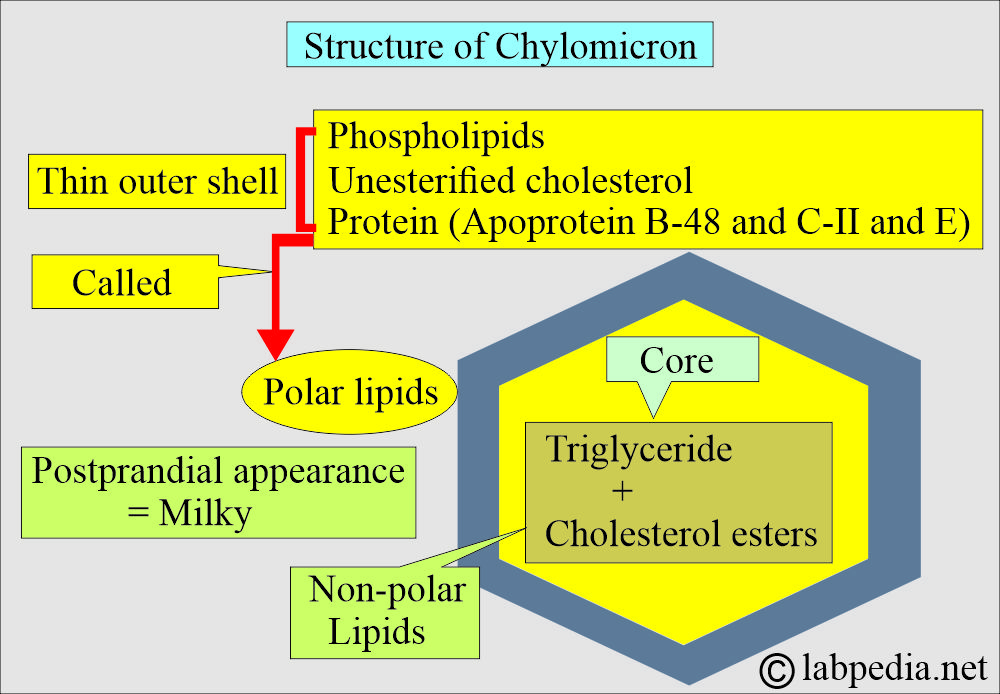
Chylomicron structure
How will you discuss the pathophysiology of chylomicrons?
- This is the primary lipoprotein responsible for transporting dietary fat, which is the exogenous source.
- Chylomicrons are a class of lipoproteins responsible for transporting exogenous cholesterol and triglycerides from the small intestine to the tissues after a meal.
- Chylomicron forms in the endoplasmic reticulum of intestinal epithelial cells.
- This consists of a core of triglycerides surrounded by a monolayer of phospholipids, cholesterol, and apoproteins.
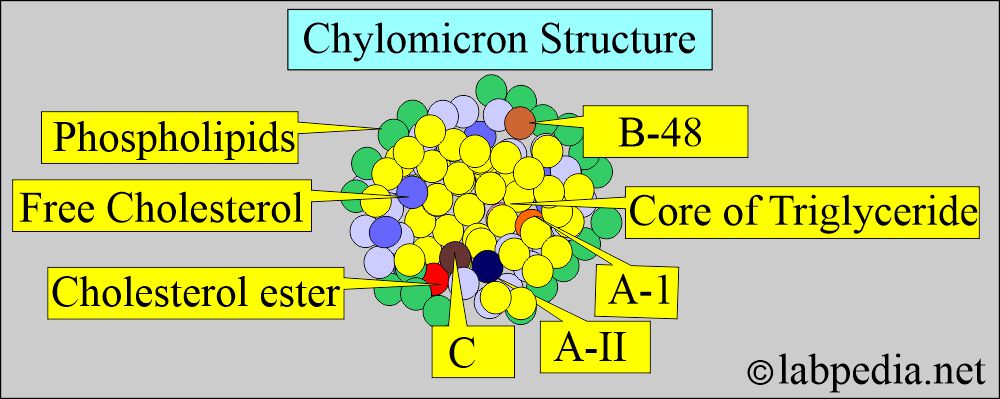
Chylomicron structure
- Chylomicron is synthesized in the intestine and released from there.
- Triglycerides are the major component.
- Apolipoproteins are only 1% to 2%. B-48, AI, AII, AIV, and C are the most common.
- The other components include cholesterol, cholesterol esters, phospholipids, and protein in very small amounts.
- Chylomicrons do not enter the portal system but go to the lymphatic system and thoracic duct.
- Then, they enter the jugular vein and the main systemic circulation.
- Now, lipoprotein lipases hydrolyze the triglyceride into monoglycerol, glycerol, and free fatty acids.
- These are taken up at the cellular level for energy metabolism or for synthesizing triglycerides for storage.
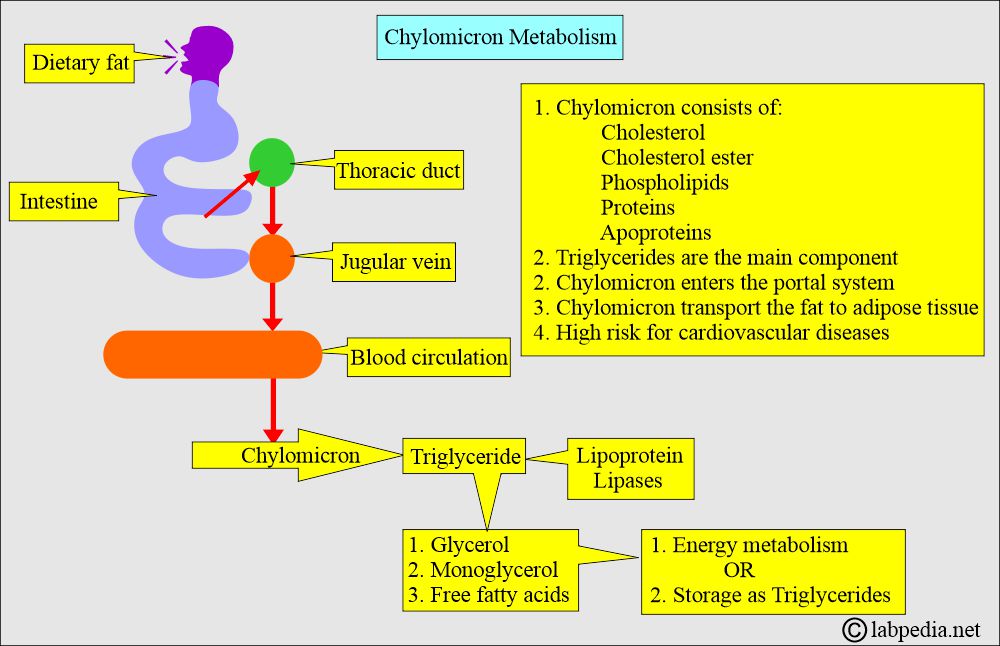
Chylomicron metabolism
How will you discuss the Chylomicron structure?
- Chylomicron also contains cholesterol, cholesterol esters, phospholipids, proteins, and apoproteins.
- Chylomicron consists of :
- Triglycerides 84%
- Cholesterol 2%
- Cholesterol esters 5%
- Protein 2%
- Phospholipids 7%.
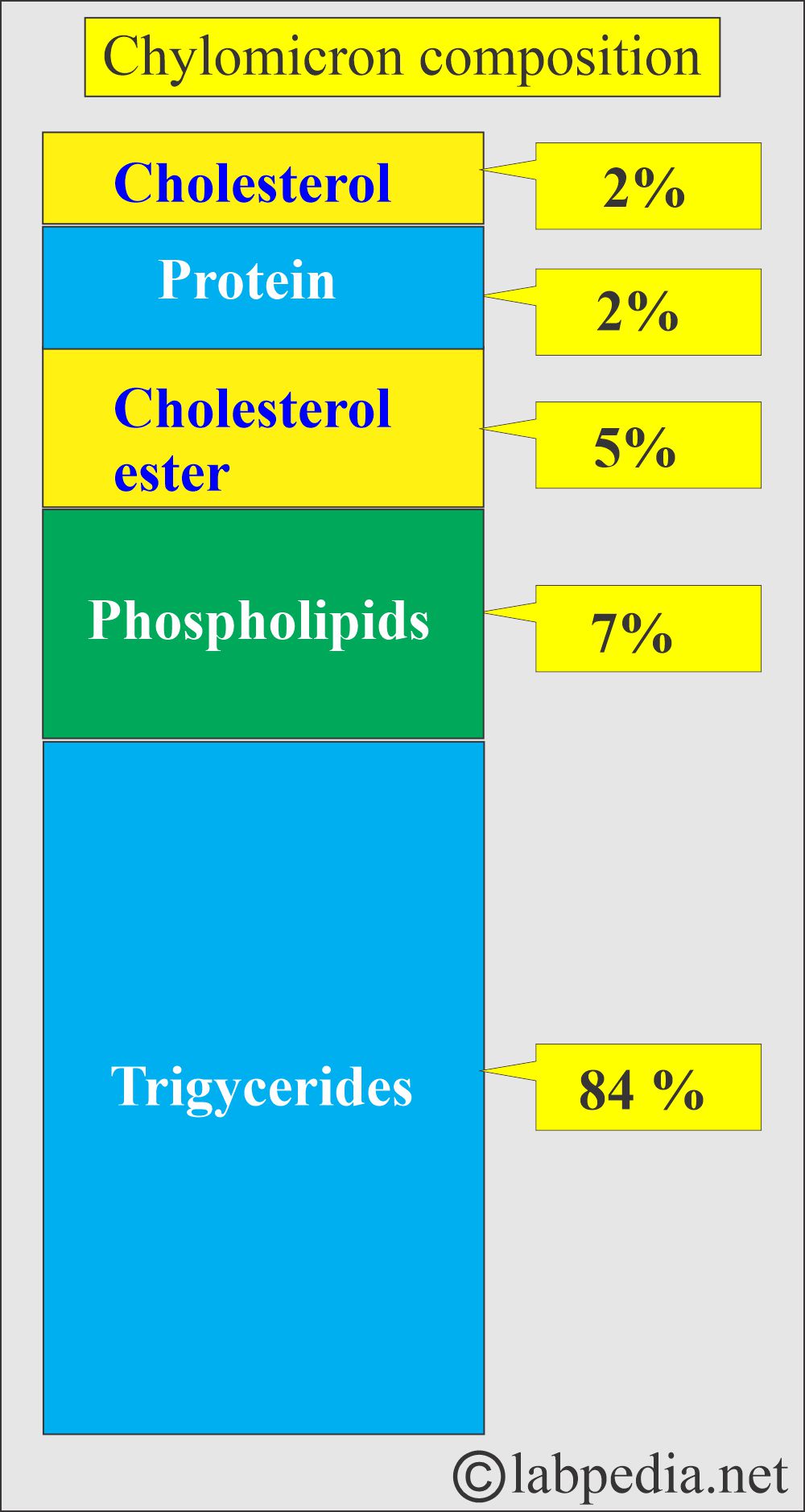
Chylomicron composition
What are the functions of a chylomicron?
- A chylomicron transports dietary fats from the small intestine to tissues such as adipose, cardiac, and skeletal muscle.
- Chylomicron provides energy to the cardiac muscles and skeletal muscles.
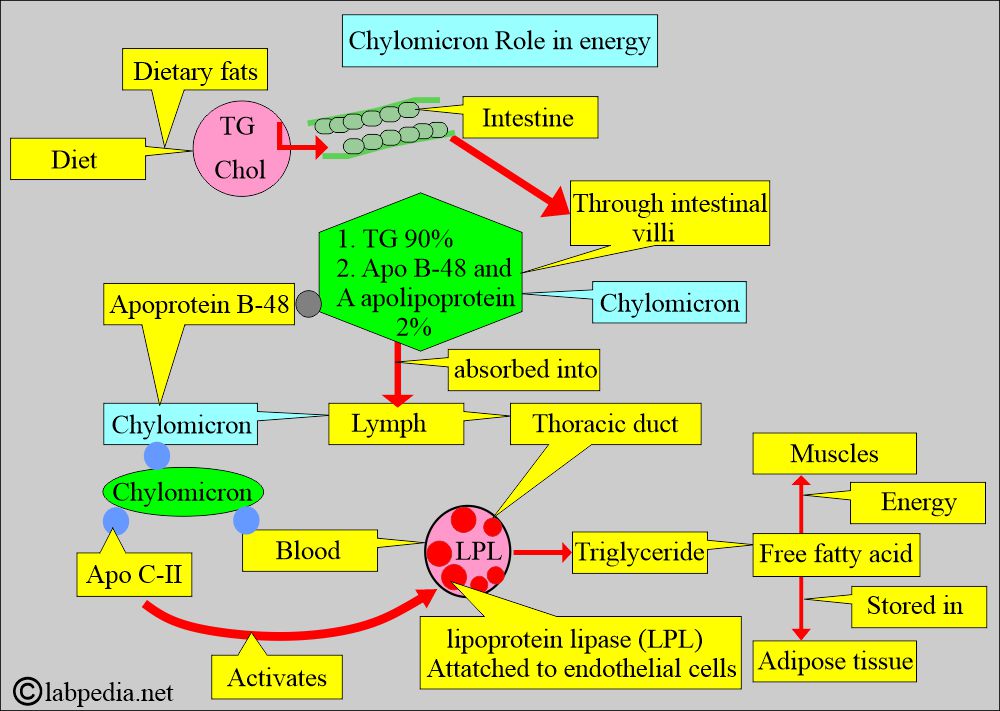
Chylomicron role in energy production
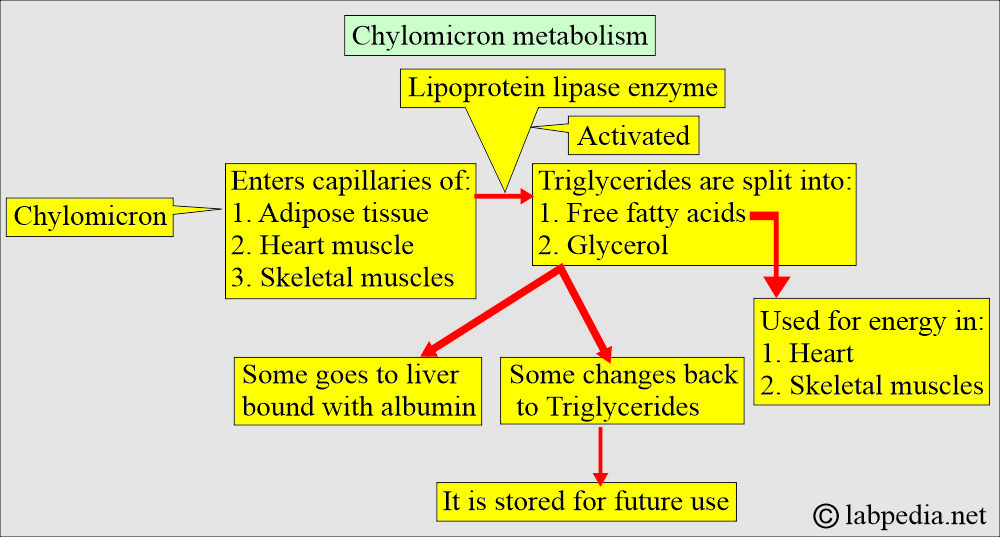
Chylomicron metabolism
What is the importance of lipoproteins?
- Associated with a high risk of cardiovascular disease.
- LDL, VLDL, and triglycerides lead to atherosclerosis.
- High HDL levels reduce cholesterol and the risk of heart disease.
Table showing the summary of characteristics of the lipoproteins
| Characteristics | Chylomicron | HDL | LDL | VLDL |
|
Creamy layer, slightly turbid | Clear | Clear or yellow-orange tint | Turbid to opaque |
|
>70.0 | 4 to 10 | 19.6 to 22.7 | 25 to 70 |
|
Origin | α – region | β – region | Pre – β region |
|
0.4 to 30 x 109 | 3.6 x 10⁹ | 2.75 x 10⁹ | 5 to 10 x 109 |
|
Intestine | Intestine and liver | Intravascular | Liver and intestine |
|
||||
| Cholesterol esterified | 5 | 38 | 49 | 11 to 14 |
| Cholesterol unesterified | 2 | 10 | 13 | 5 to 8 |
| Triglycerides | 84 | 9 | 11 | 44 to 60 |
| Phospholipids | 7 | 22 | 27 | 20 to 23 |
| Proteins | 2 | 21 | 23 | 4 to 11 |
|
Markedly raised | Normal | Normal/ Raised | Moderately to Markedly raised |
|
Pancreatitis and acute abdomen | Decreased risk of CAD | Increased risk of CAD | Increased risk of CAD |
|
Transport dietary lipids to tissue | Carry cholesterol from tissue to liver | Carries cholesterol to tissue |
Transport endogenous TG from the liver to adipose tissue |
Questions and answers:
Question 1: What is the main function of the chylomicron?
Chylomicrons transport fats to adipose tissue and muscles.
[question-answer number=”2″ question=” What is a major component of a chylomicron?” answer=” Triglyceride is the major component of the chylomicron.”
Please join our group: https://www.facebook.com/share/g/1LjVBX2G8B/