
Laboratory:- Part 1 – Serum and Plasma Preparation, Specimen Storage and Precautions
Serum and Plasma Preparation
- To prepare serum or Plasma, the following precautions and steps are crucial for accurate results.
How will you prepare serum and plasma?
- Upon collection, the sample should be examined immediately.
- Serum and plasma should be separated as soon as possible, within 2 hours of collection.
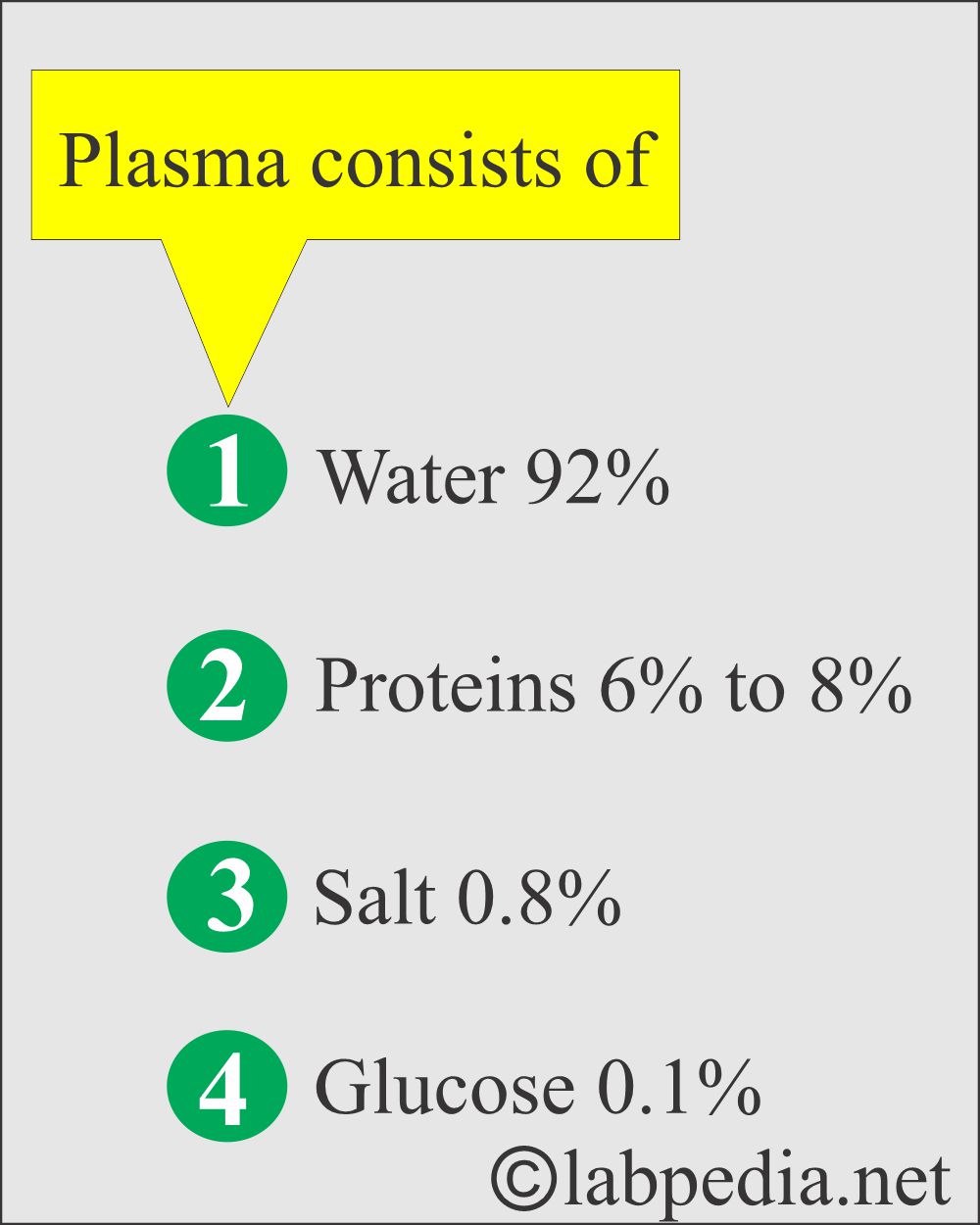
Plasma consists of:
- Don’t try to separate serum from the blood prematurely.
- Give at least 20 to 30 minutes at 37 °C for the clot to form.
- Centrifuge the sample to get a clear serum.
- Premature centrifugation can lead to microclot formation, which may pose a problem for automation.
- The coagulation process is completed in 20 to 30 minutes in the glass and silicon tubes but is delayed in the plastic tube.
What samples are avoided, and what are the possible causes?
- Dark brown serum indicates intravascular hemolysis with the formation of methemalbumin.
- This may occur in severe sepsis, hemolytic crises of sickle cell anemia, and paroxysmal nocturnal hemoglobinuria.
- Dark green serum often indicates the presence of biliverdin and may be seen in severe obstructive jaundice.
- If the serum is clear and turbidity appears after some time, this indicates cryoglobulins; this is usually seen if the serum is kept in the fridge.
- If the serum is more viscous, then check for paraproteins.
- In multiple myeloma cases, serum protein may reach 13 g/dL and produce noticeable serum changes.
- If serum shows fine fibrin threads after separation, it may be due to heparin therapy or other anticoagulant treatment.
- Rarely, you may see a brown tint in the serum, which may be due to myoglobin following muscle injury or myositis.
- The bright yellow serum may be due to drugs or vitamin supplements.
- Green tint serum: Ladies on contraceptive pills may have a green tint in the serum due to ceruloplasmin.
- Yellow serum: The jaundiced serum is yellow and should be handled with care.
- Serum yield small: If the serum yield is small, this may indicate hemoconcentration or polycythemia.
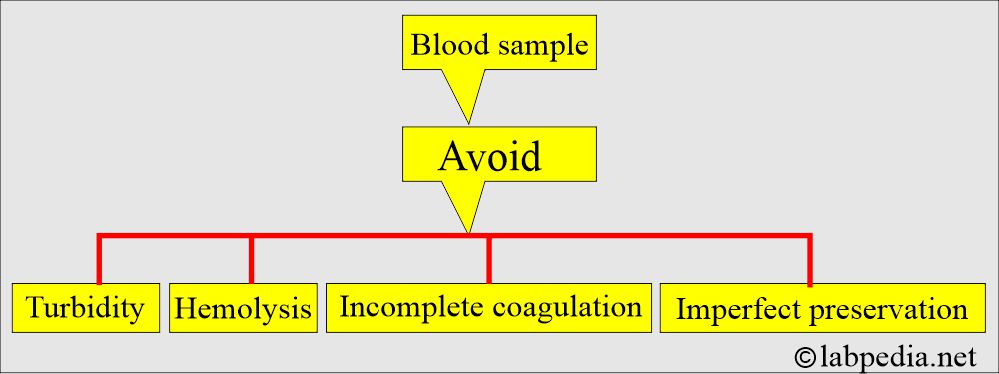
Laboratory blood sample to be rejected
What are the precautions to get a good sample?
- Improve the venepuncture procedure.
- Use plastic beads or gel tubes to get better serum.
- Plasma obtained with lithium heparin as the anticoagulant is clearer.
- Can use serum clarifying filters to get a good serum.
- For glucose, use preservatives that preserve it and enzymatic methods such as lithium iodoacetate.
- Avoid exposure of the sample to high temperatures.
- Avoid causing trauma to the sample, e.g., vigorous handling.
- Don’t keep serum or plasma in contact with the cells for more than 30 minutes.
- Potassium level increases by 2 to 8 mmol/L without hemolysis and even in the refrigerator.
- If plasma glucose is left in contact with cells at room temperature, it will lose 10% of its glucose per hour.
- Serum or plasma for glucose, separated immediately, will remain stable for 4 hours in the fridge.
- Serum or plasma for hormone testing requires even more precautions; the best option is to freeze the sample.
How will you store the sample?
- If centrifuging the sample is delayed for any reason, keep it at room temperature. Don’t refrigerate, as this may lead to hemolysis.
- If there is a delay in the test, then keep serum or plasma at 4 °C.
- If the temperature of 4 °C is unsuitable for the special test, keep the serum at -20 °C.
- Centrifuge the sample with a stopper to reduce evaporation.
- The stopper also prevents the evaporation of volatile analytes such as ethanol.
- The stopper also maintains the anaerobic conditions needed for CO2 and ionized calcium.
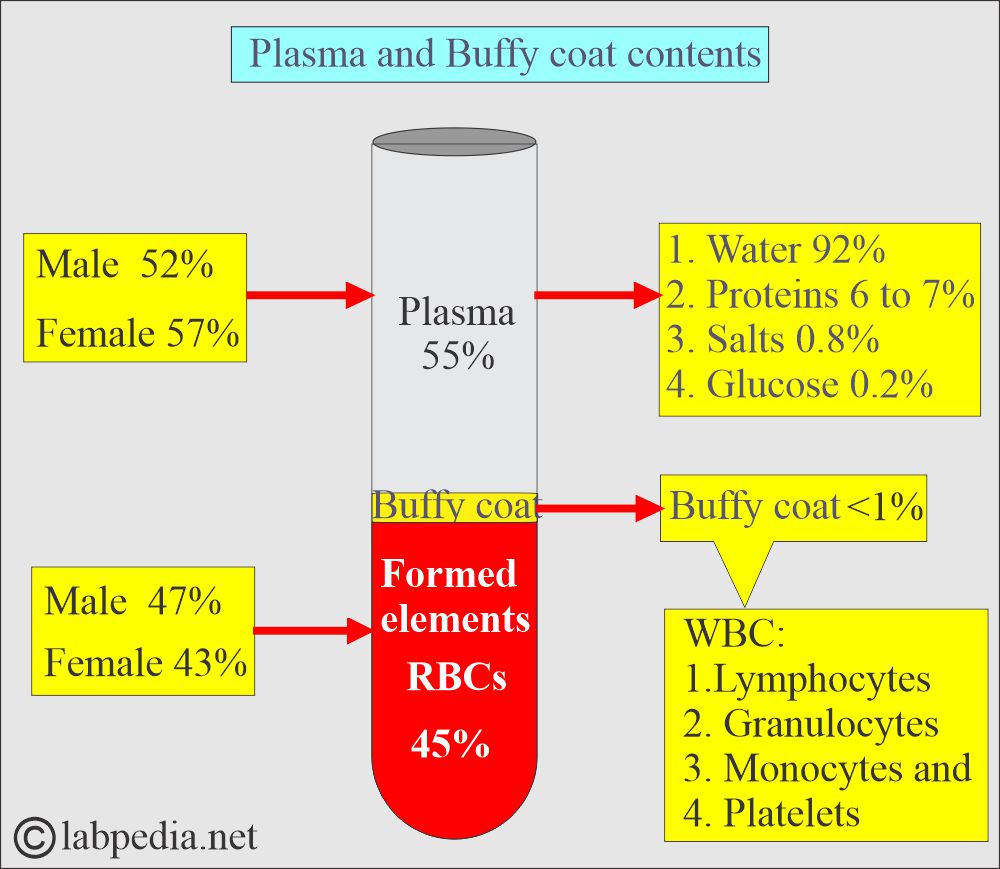
Plasma and buffy coat contents

Serum over the clotted blood
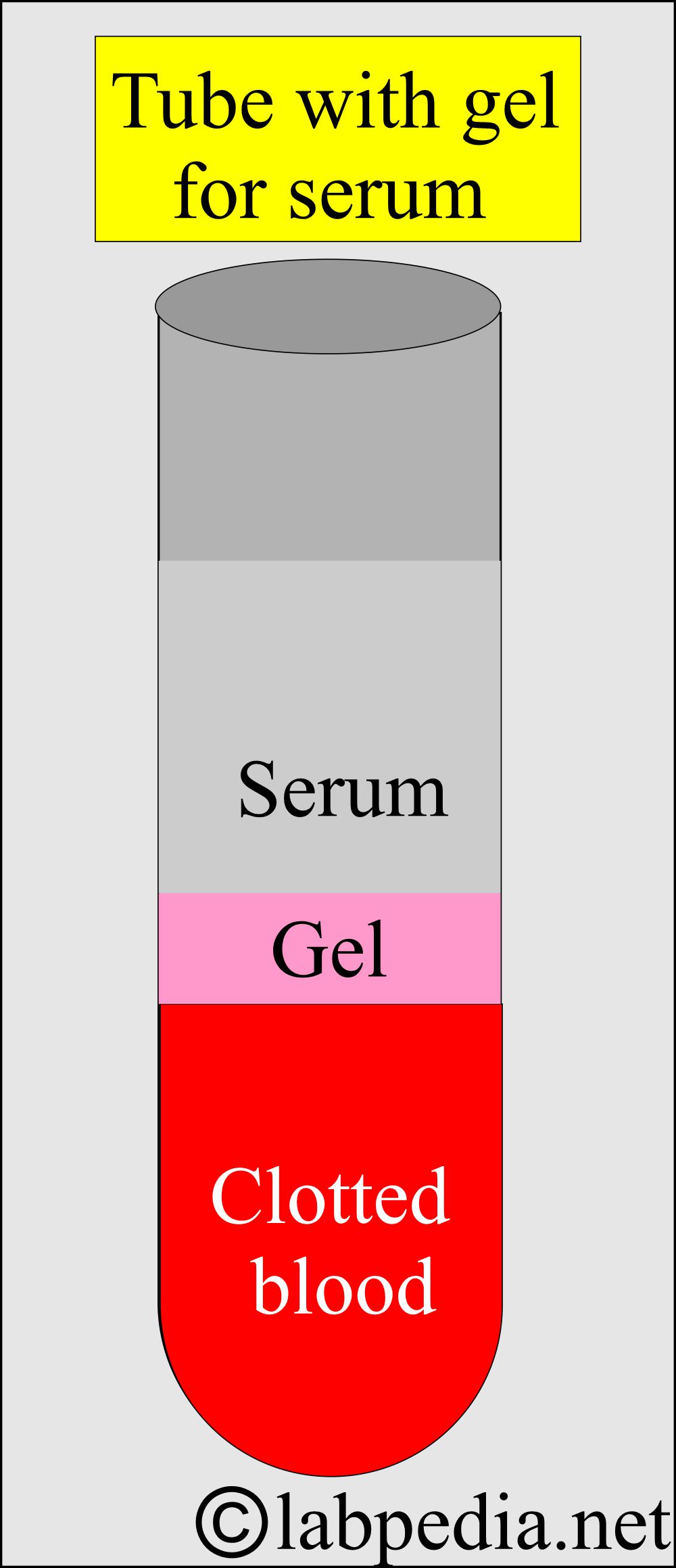
Serum separated in Gel tube
- Plastic beads or silicone gel form a barrier that separates the clot from the serum and allows easy transfer.
- The serum or plasma should not come into contact with cells for more than 30 minutes.
What is the difference between serum and plasma?
- Most of the time, serum is used to estimate various tests and enzymes.
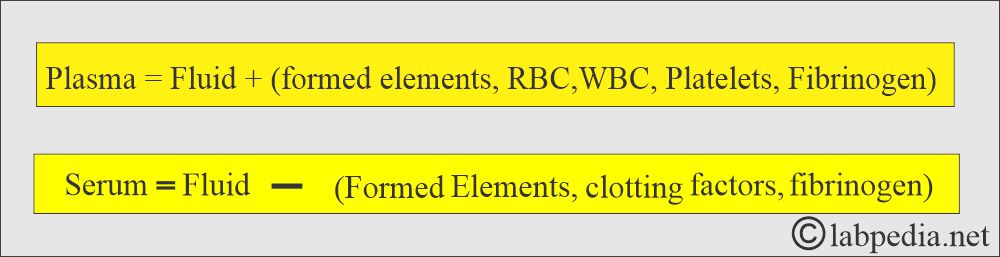
Serum and Plasma difference
- There are a few tests where plasma interferes with the enzyme estimations:
- Heparin interferes with acid phosphatase.
- EDTA interferes with alkaline phosphatase.
What are the differences between serum and plasma?
| Parameters | Plasma | Serum |
|
|
|
|
|
|
|
|
|
|
|
|
|
|
|
|
|
|
Questions and answers:
Question 1: What is the main difference between plasma and serum?
Serum does not contain fibrinogen while plasma contains fibrinogen.
Question 2: Is there any reason for getting a very small amount of serum?
Yes, there is the possibility of getting a small quantity of serum when the patient is dehydrated or has polycythemia.