
HealthFlex
×
  • Home
  • Immunology Book
  • Lab Tests
    • Hematology
    • Fluid analysis
    • CSF
    • Urine Analysis
    • Chemical pathology
    • Blood banking
    • Fungi
    • Immune system
    • Microbiology
    • Parasitology
    • Pathology
    • Tumor marker
    • Virology
    • Cytology
  • Lectures
    • Bacteriology
    • Liver
    • Lymph node
    • Mycology
    • Virology
  • Blog
    • Economics and technical
    • Fitness health
    • Mental health
    • Nutrition
    • Travel
    • Preventive health
    • Nature and photos
    • General topic
  • Medical Dictionary
  • About Us
  • Contact

Glycemic Index (GI) for Diabetics

March 17, 2026BlogPathologyPreventive health

Glycemic Index (GI) for Diabetics

How will you define the glycemic index (GI)?

  • It is defined as the rate at which carbohydrates enter the bloodstream and affect blood glucose levels.
  • Or it is the % rise in the blood glucose after consuming the test food, compared to the rise produced by the same amount of carbohydrate from glucose.
  • Understanding the Glycemic Index for Diabetics.

How will you classify the diet on the basis of the glycemic index?

  1. A low-GI diet has less carbohydrate.
  2. On the basis of the glycemic index (GI), the values are:
    1. Low GI = <55.
    2. Moderate GI = 56 to 69.
    3. High GI = >70.
  3. Examples of various foods are:
  4. Low GI foods are:
    1. Apples.
    2. Dried apricots.
    3. Plums.
    4. Cherries.
    5. Plain yogurt.
    6. Milk.
    7. Lentils.
    8. Kidney beans and chickpeas.
    9. Baked beans.
    10. Whole barley
  5. Moderate GI foods are:
    1. Oatmeal.
    2. Whole-grain bread.
    3. Oranges.
    4. Grapes.
    5. Figs.
    6. Sweet potatoes.
    7. Pasta.
    8. Corn.
  6. High GI foods are:
    1. Sugar of all types.
    2. Watermelon.
    3. Bananas.
    4. Cornflakes.
    5. White bread.
    6. Mashed potatoes.

What foods are to be avoided?

  • The answer is NO or not completely.
  • The diabetic association recommendations are:
    1. Keep your saturated fat intake low.
    2. There is a link between diabetes and cardiovascular diseases and high blood pressure.
    3. So limit the sodium intake. Roughly 1500 mg/day.
    4. Avoid ham, bacon, prepared soup, sauces, and take-out foods.
    5. Avoid alcohol intake.
    6. Avoid carbohydrate foods in their simple forms, such as sugars, white flour, white pasta, commercial pastries, cakes, and cookies.
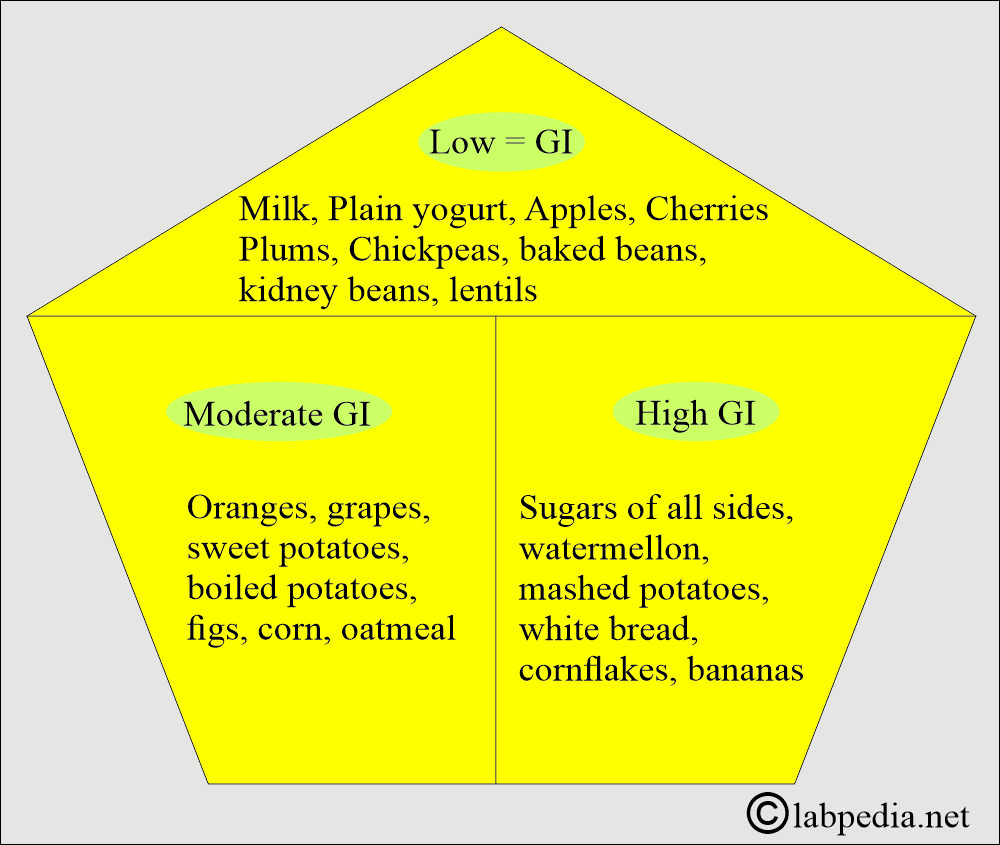
Glycemic Index (GI) for Diabetics: Glycemic diets

Glycemic Index (GI) for Diabetics: Glycemic diets

Possible References Used
Go Back to Blog

Add Comment Cancel


The reCAPTCHA verification period has expired. Please reload the page.

  • Blog
    • Disease
    • Economics and technical
    • Fitness health
    • General topic
    • Mental health
    • Nature and photos
    • Nutrition
    • Preventive health
    • Travel
  • Lectures
    • Bacteriology
    • Liver
    • Lymph node
    • Mycology
    • Pathology
    • Psychiatry
    • Virology

About Us

Labpedia.net is non-profit health information resource. All informations are useful for doctors, lab technicians, nurses, and paramedical staff. All the tests include details about the sampling, normal values, precautions, pathophysiology, and interpretation.

[email protected]

Quick Links

  • Blog
  • About Us
  • Contact
  • Disclaimer

Our Team

Professor Dr. Riaz Ahmad Bhutta

Dr. Naheed Afroz Syed

Dr. Asad Ahmad, M.D.

Dr. Shehpar Khan, M.D.

Copyright © 2014 - 2026. All Rights Reserved.
Web development by Farhan Ahmad.