HealthFlex
×
  • Home
  • Immunology Book
  • Lab Tests
    • Hematology
    • Fluid analysis
    • CSF
    • Urine Analysis
    • Chemical pathology
    • Blood banking
    • Fungi
    • Immune system
    • Microbiology
    • Parasitology
    • Pathology
    • Tumor marker
    • Virology
    • Cytology
  • Lectures
    • Bacteriology
    • Liver
    • Lymph node
    • Mycology
    • Virology
  • Blog
    • Economics and technical
    • Fitness health
    • Mental health
    • Nutrition
    • Travel
    • Preventive health
    • Nature and photos
    • General topic
  • Medical Dictionary
  • About Us
  • Contact

Fluid Analysis:- Part 2 – Fluid Analysis Parameters

March 2, 2026Fluid analysisLab Tests

Table of Contents

Toggle
  • Fluid Analysis
        • What are the samples for Fluid Analysis?
        • What are the indications for Fluid Analysis?
        • What are the precautions for Fluid Analysis?
        • How will you discuss the pathophysiology of Fluids?
        • What are the various procedures for obtaining fluids?
        • What are the parameters tested in the fluid analysis?
        • What are the therapeutic advantages of Fluid Analysis?
        • What is the Difference between various fluids?
        • How will you compare Transudate and Exudate?
      • Questions and answers:

Fluid Analysis

What are the samples for Fluid Analysis?

  • The fluid for the analysis is:
    1. Ascitic fluid.
    2. Pleural fluid.
    3. Pericardial fluid.
    4. Amniotic fluid.
    5. Cerebrospinal fluid.
    6. Semen analysis.
    7. Cervical mucus test.
    8. Joint fluid (synovial fluid).
    9. Sweat chloride test.
    10. Urine analysis.

What are the indications for Fluid Analysis?

  1. To diagnose the cause of the fluid.
  2. This could be therapeutic.
  3. To diagnose the diseases.

What are the precautions for Fluid Analysis?

  1. The fluid analysis should be performed immediately to prevent false results caused by cellular or chemical deterioration.
  2. Follow precautions if there is a delay in the testing of the fluid.

How will you discuss the pathophysiology of Fluids?

  1. Effusions from the abdomen, pleura, pericardium, and joints are classified into exudate and transudate.
  2. Exudates are caused by inflammatory, infectious, or neoplastic diseases.
  3. Transudates are caused by venous congestion, hypoproteinemia, and fluid overload.
  4. Some fluids are analyzed to diagnose diseases, such as sweat for cystic fibrosis.

What are the various procedures for obtaining fluids?

  1. Lumbar puncture for CSF.
  2. Amniocentesis to get fluid from the uterus.
    1. This fluid is aspirated from the amniotic sac.
    2. It is used for genetic, chromosomal, and fetal abnormalities.
  3. Pericardiocentesis for pericardial fluid.
  4. Thoracentesis for pleural fluid.
  5. Paracentesis for the peritoneal fluid.
  6. Arthrocentesis for the fluid from the joints.
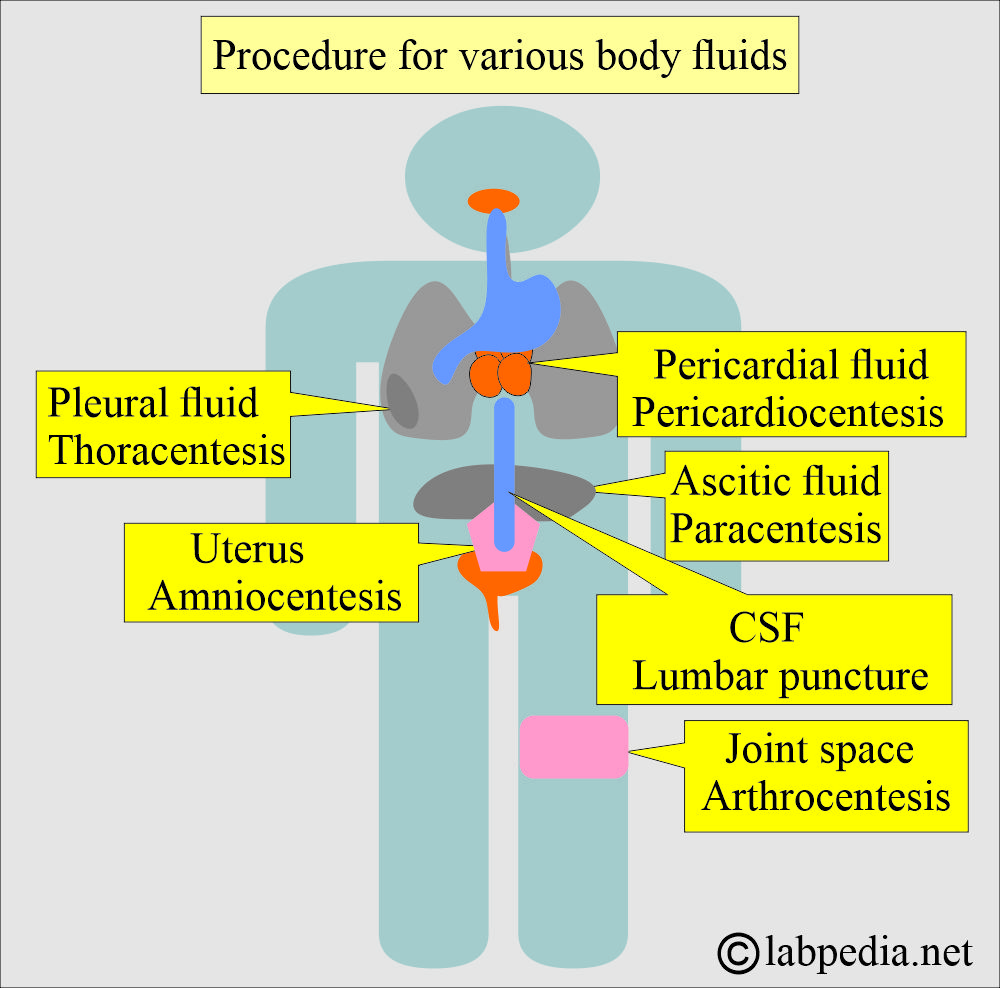
Fluid Analysis: Fluids and various procedures

Fluid Analysis: Fluids and various procedures

What are the parameters tested in the fluid analysis?

  1. Gross appearance.
  2. Specific gravity
  3. Total protein
  4. LDH level.
  5. Total cell count.
  6. Microscopic examination for the differential count.
  7. Cytospin for the cytological examination.
  8. In the case of CSF, the glucose level is estimated.
  9. In some cases, an AFB or Gram stain is done.
  10. Fluid analysis is used to diagnose the etiology of fluid formation, and it may also be therapeutic.

What are the therapeutic advantages of Fluid Analysis?

  1. Fluid aspirated from the pleural cavity improves ventilation and oxygenation.
  2. Fluid from the Peritoneum relieves the pressure and eases breathing and eating.
  3. Aspirated joint fluid relieves pain and improves function.
  4. Fluid aspirated from the pericardial cavity improves diastolic filling and cardiac output.

What is the Difference between various fluids?

Test Exudate Transudate Chylous
  • Appearance
  • Cloudy
  • Clear
  • Cloudy to milky
  • Color
  • Variable
  • Pale yellow
  • Pale yellow to milky
  • Cell count
  • >1000
  • <1000
  • >1000
  • DLC
  1. Polys
  2. MN cell
  • Lympho
  1. Poly
  2. MN cells
  • Triglycerides
  • <60 mg/dL
  • <60 mg/dL
  • >110 mg/dL
  • Total protein
  • >3.0g/dL
  • <3.0g/dL
  • >3.0g/dL
  • Fluid protein/serum Total Protein
  • >0.5
  • <0.5
  • >o.5
  • Fluid LDH/serum LDH
  • >0.6
  • <0.6
  • >0.6

TP = Total protein

MN = Mononuclear cells.

How will you compare Transudate and Exudate?

Parameter (Characteristic features)        Transudate                        Exudate            
  • Appearance
  • Pale yellow
  1. Yellow = Inflammatory
  2. Red = Hemorrhage
  3. Brown = Bilirubin (cloudy)
  • Protein
  • <3 g/dL
  • >3 g/dL
  • Fluid: serum protein ratio
  • <0.5
  • >0.5
  • Fluid: LD ratio
  • <0.6
  • >0.6
  • Specific gravity
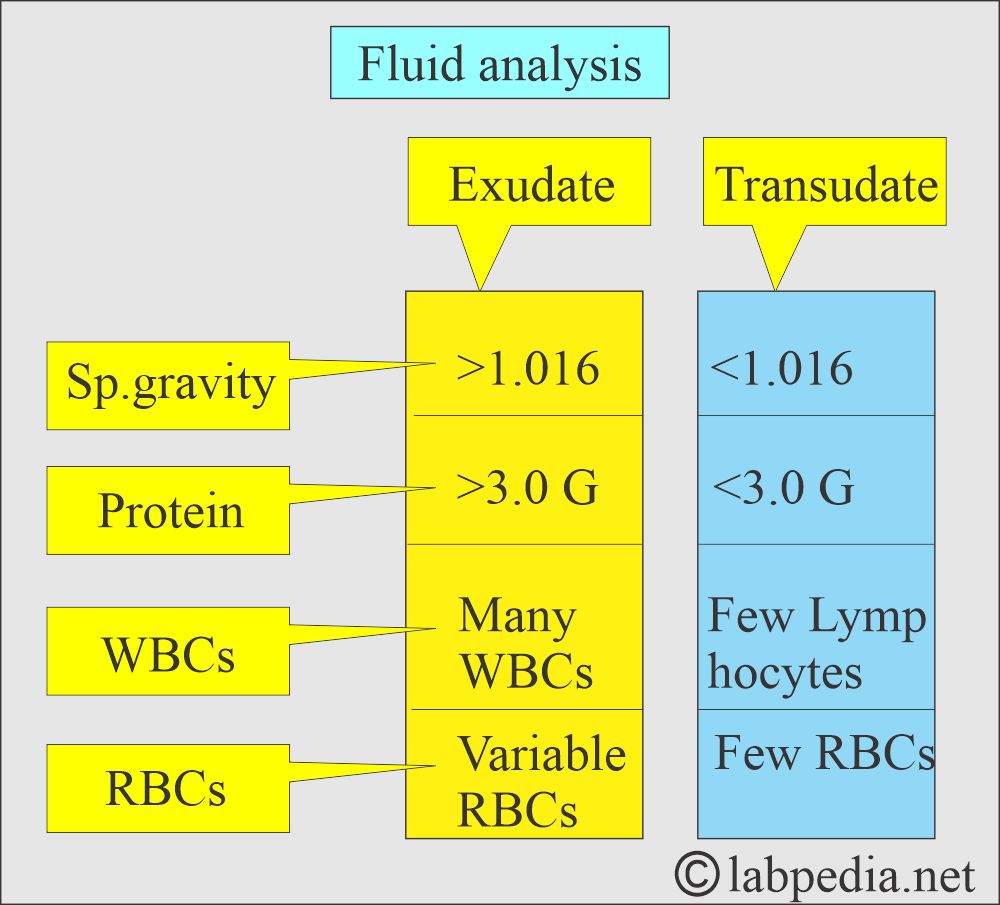
  • <1.016
  • >1.016
  • WBC
  • Absent
  • Increased
  • LDH
  • Normal  <200 IU/L
  • Increased >200 IU/L
  • Glucose
  • Normal (equal to serum level)
  • Less or equal to serum
  • Pleural fluid cholesterol
  • <60 mg/dL
  • >60 mg/dL
  • Pleural fluid: serum cholesterol  ratio
  • <0.3
  • >0.3
  • Pleural fluid: bilirubin ratio
  • <0.6
  • >0.6
  • Fibrinogen
  • No clot
  • Clots are seen
  • Spontaneous clotting
  • Negative
  • May see clot formation
  • Cell count
  • 300 to 1000 /cmm
  • >1000 /cmm
  • WBCs
  • Few lymphocytes
  • Many polys >25%
  • RBCs
  • Few
  • Variable
  • Differential
  1. Mononuclear cells predominate
  2. <25% neutrophils
  • >25% neutrophils
Fluid exudate/transudate difference

Fluid exudate/transudate difference

  • Please see more details in Fluid Part 3.

Questions and answers:

Question 1: How will differentiate transudate and exudate on the basis of protein
Show answer
Exudate has >3 G while transudate has <3 G.
Question 2: What is amniocentesis?
Show answer
It is the aspiration of fluid from the amniotic sac.

Possible References Used
Go Back to Fluid analysis

Comments

Omer Alkhateem Reply
February 4, 2024

Thank

Omer Reply
February 4, 2024

Thank you for the clear explanation and sufficient information.

Dr. Riaz Reply
February 4, 2024

Thanks.

Add Comment Cancel


The reCAPTCHA verification period has expired. Please reload the page.

  • Lab Tests
    • Blood banking
    • Chemical pathology
    • CSF
    • Cytology
    • Fluid analysis
    • Fungi
    • Hematology
    • Immune system
    • Microbiology
    • Parasitology
    • Pathology
    • Tumor marker
    • Urine Analysis
    • Virology

About Us

Labpedia.net is non-profit health information resource. All informations are useful for doctors, lab technicians, nurses, and paramedical staff. All the tests include details about the sampling, normal values, precautions, pathophysiology, and interpretation.

[email protected]

Quick Links

  • Blog
  • About Us
  • Contact
  • Disclaimer

Our Team

Professor Dr. Riaz Ahmad Bhutta

Dr. Naheed Afroz Syed

Dr. Asad Ahmad, M.D.

Dr. Shehpar Khan, M.D.

Copyright © 2014 - 2026. All Rights Reserved.
Web development by Farhan Ahmad.