
Diabetes Mellitus and HbA1c
Diabetes mellitus
What are the initial signs and symptoms of Diabetes mellitus?
The patient will have 3 P:
- Polyphagia. The patient will have a frequent need to eat.
- polydipsia. When there is an urge to drink water frequently.
- Polyuria. There will be an increased frequency of urination.
- Also, you can add intolerance to glucose.
What are the complications of Diabetes Mellitus?
- Vascular diseases.
- Neurologic diseases.
- Optic (eye0 diseases.
- Damage to delicate blood vessels leads to vision problems (retinopathy).
- Damage to renal vessels impairs the filtration of harmful material from the kidneys.
- There will be neurological loss due to damaged blood vessels.
- Damaged blood vessels may cause blood clots, which may lead to a heart attack, stroke, and high blood pressure.
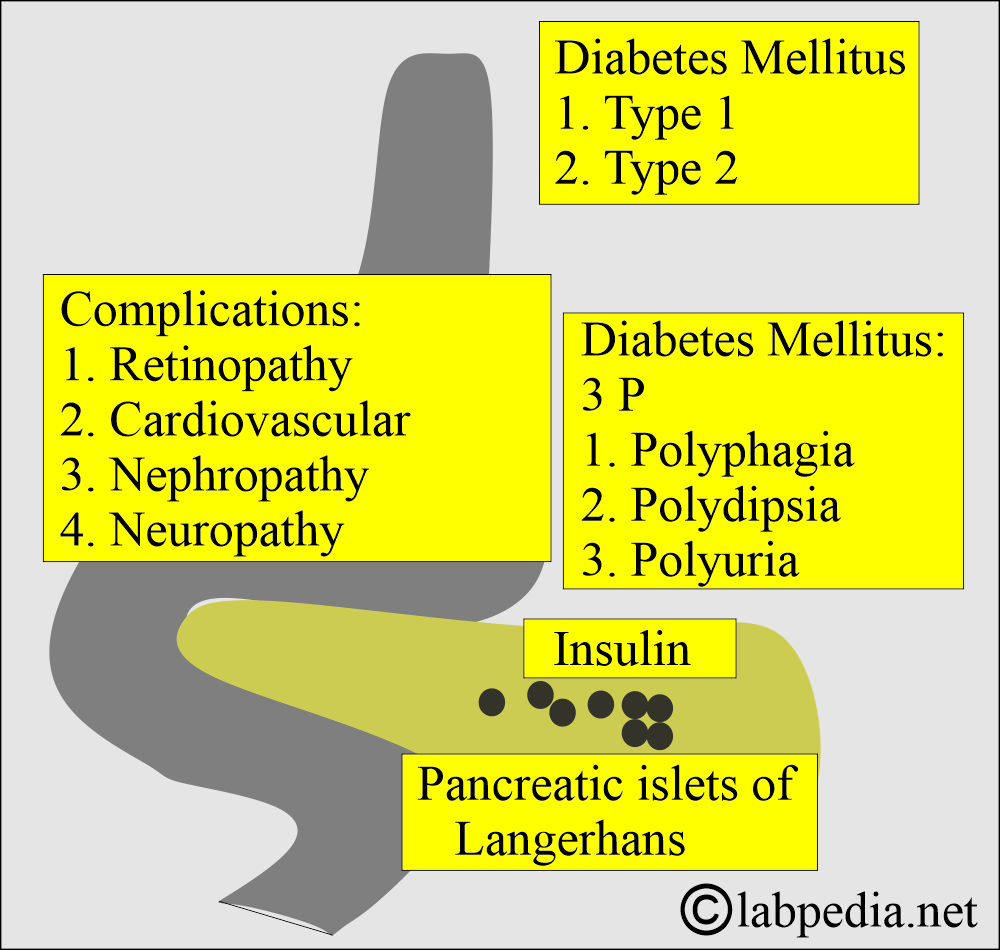
Diabetes mellitus introduction
What is the role of HbA1c in Diabetes Mellitus?
How will you define HbA1c?
- This is also called glycosylated hemoglobin.
- It is Glycated hemoglobin where glucose attaches to hemoglobin.
- We know RBC half-life is 120 days, so you can assess the glucose level over a 2 to 3-month period.
- G;lucose attaches to the terminal valine amino acid of the beta-chain globulin.
- Glycosylation takes place in the form of HbA1a, HbA1b, and HbA1c.
- HbA1c accounts for 70% of glycosylation, so we need to measure it.
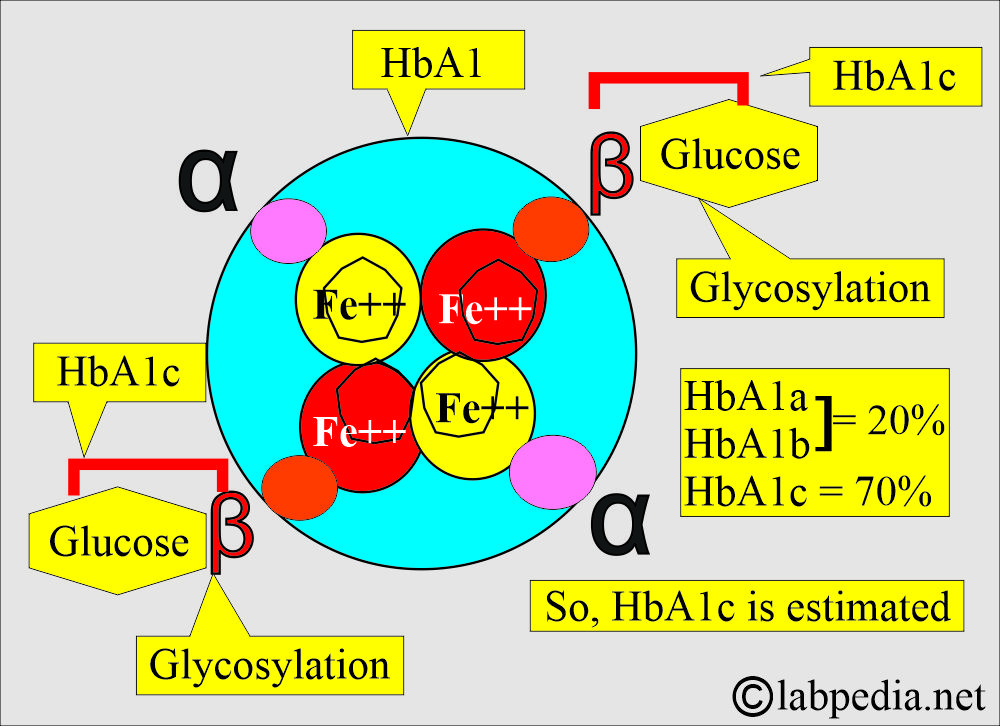
HbA1c structure and function
What are the advantages of HbA1c?
- No fasting sample needed. Can be done on a random blood sample.
- There is no variation from day to day.
- It provides a glucose range over a 2- to 3-month period.
What is the diagnostic value of HbA1c?
| HbA1c | Possibility of diabetes mellitus |
|
|
|
|
|
|
What is the relation between HbA1c and the treatment needed?
| HbA1c % | Mean plasma glucose level mg/dL | Advice needed |
|
|
|
|
|
|
|
|
|
|
|
|
|
|
|
|
|
|
|
|
|
|
|
|
|
|
|
What will be the glucose range and treatment recommendation?
| Blood glucose level | Recommendations |
|
|
|
|
|
|
|
|
What is the role of HbA1c in treating diabetes mellitus?
- Your goal should be to keep HbA1c <7%.
- For younger patients, keep HbA1c <6.5%.
- For elderly patient try to keep HbA1c between <7.5% to 8%
Another source:
- Good diabetic control = <7%.
- Fair diabetic control = 10%
- Poor diabetic control = 13% to 20%.
American diabetes association recommendation:
- Average bedtime glucose level = <120 mg/dL and HbA1c = <6%.
- Average bedtime glucose level = 100 to 140 mg/dL and HbA1c = <7%.
- Average bedtime glucose level = <160 mg/dL and HbA1c = >8%.